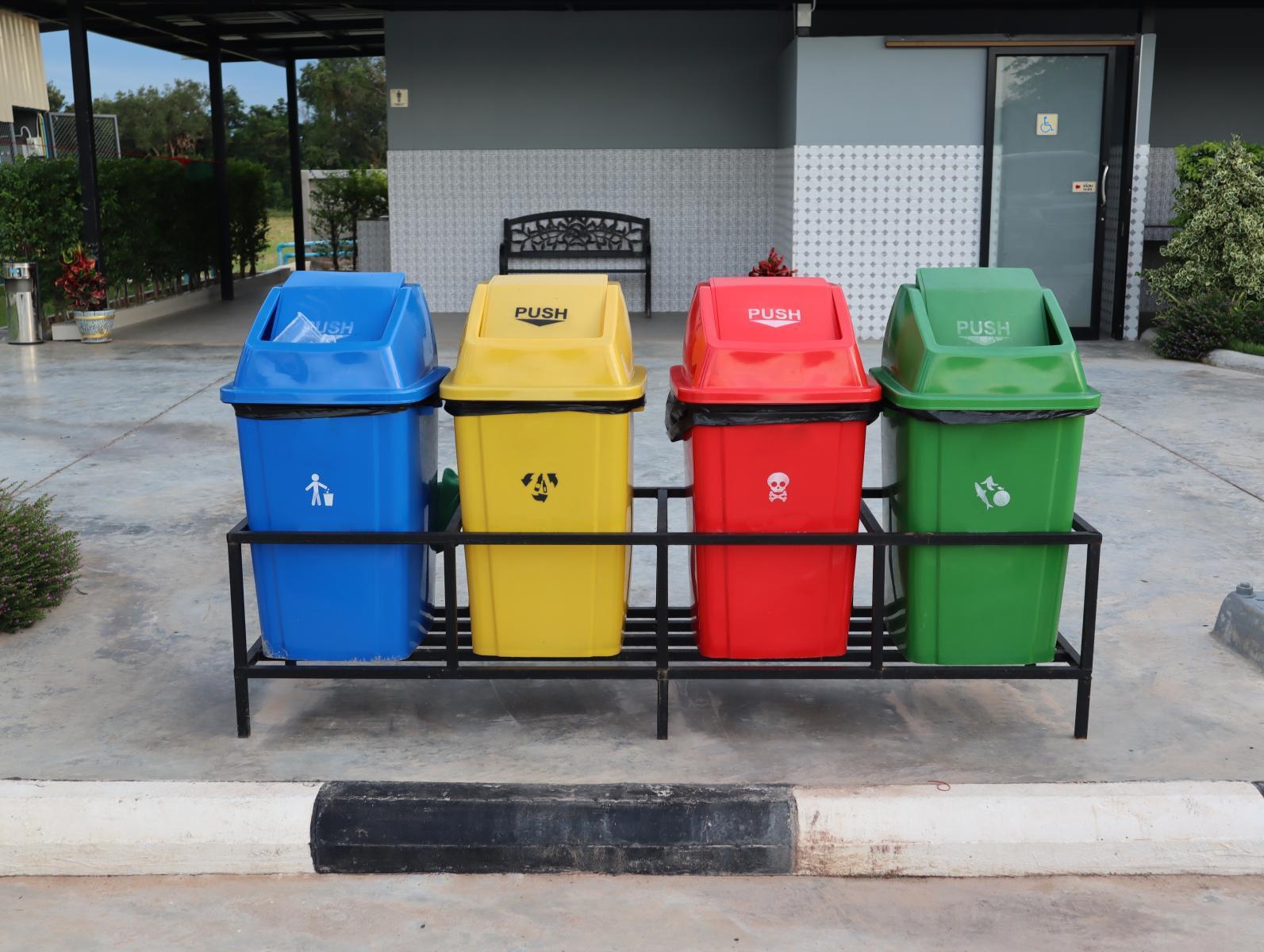
Waste Segregation at Source
Waste segregation is the process of separating different types of waste before disposal. It is one of the most important steps in effective waste management because mixed waste is difficult to recycle and often ends up in landfills.
According to the Solid Waste Management Rules, 2016, every waste generator should segregate waste into biodegradable, non-biodegradable and domestic hazardous waste. Proper segregation improves recycling efficiency and reduces environmental pollution.
Types of Waste Segregation
- Wet Waste (Food and Organic Waste)
- Dry Waste (Paper, Plastic, Metal, Glass)
- Hazardous Waste (Chemicals, Paints, Batteries)
- E-Waste (Computers, Mobile Phones, Electronics)
Benefits of Waste Segregation
- Improves recycling efficiency.
- Reduces landfill waste.
- Conserves natural resources.
- Minimizes environmental pollution.
- Supports compliance with Solid Waste Management Rules.
Best Practices
- Use separate bins for wet and dry waste.
- Keep hazardous waste separate from regular waste.
- Educate employees about waste segregation.
- Partner with authorized recyclers.
- Maintain proper waste handling records.
Effective waste segregation is the first and most important step toward building a sustainable recycling ecosystem and supporting India(s) circular economy.